
Introduction: Why Foucault’s Concept of Power Still Shocks the System
For students entering the realm of social theory—whether at the undergraduate or doctoral level—Michel Foucault represents a seismic departure from traditional political philosophy. For centuries, classical political thought framed power through a legalistic and state-centric lens. Power was conceptualized as a centralized commodity possessed by a monarch, state apparatus, or ruling class, operating from the top down primarily through prohibition, legal censorship, and physical repression. Foucault fundamentally destabilized this paradigm by demonstrating that if power were purely prohibitive and negative—a force that merely says “no”—it would be far too fragile to command obedience. Instead, modern power functions effectively precisely because it is capillary, relational, pervasive, and fundamentally productive. It circulates through the entire social fabric, constructing human subjects, inducing desires, forming discourses, and generating new domains of knowledge.
Central to this reconceptualization is Foucault’s formulation of the power/knowledge nexus (pouvoir-savoir)Rather than viewing knowledge as a neutral, objective realm that liberates humanity from the clutches of power, Foucault establishes that power and knowledge are mutually constitutive: the exercise of power continuously creates new fields of knowledge, while systems of knowledge continuously induce concrete power-effects. Every society operates under a specific regime of truth—an institutionalized matrix of techniques, procedures, and sanctions that regulates which statements are validated as “true” or discarded as “false,” attaching distinct socio-political consequences to those truths. In modern Western societies, these regimes of truth are anchored not in religious decree or royal decree, but in the human and social sciences—psychiatry, criminology, demography, and sociology—which establish scientific norms to classify, supervise, and govern human behavior.
For scholars seeking a clear, accessible doorway into Foucault’s complex theoretical universe, Colin Gordon’s edited collection Power/Knowledge: Selected Interviews and Other Writings 1972–1977 stands as the single best entry point. While Foucault’s formal monographs can present daunting epistemological density, this volume records Foucault explaining his concepts in direct, conversational dialogue with historians, philosophers, and activists. Across key chapters such as “Two Lectures” and “Truth and Power,” Foucault candidly maps his theoretical trajectory, clarifies misconceptions regarding his relationship to structuralism, and articulates his “ascending analysis” of power from the bottom up. Furthermore, because these interviews took place during the immediate aftermath of his major works, Power/Knowledge serves as an indispensable conceptual bridge connecting his landmark monographs—most notably Discipline and Punish (1975) and The History of Sexuality, Vol. 1 (1976)—with tangible political struggles and institutional practices .
2. Institutional Mechanics, the Panoptic Paradigm, and the Relevance for Contemporary Research
The analytical framework developed throughout Power/Knowledge provides transformative tools across multiple academic disciplines. For social theorists, Foucault offers a liberation from “economism,” breaking past both liberal contract models (which view power as a legal right transferred via contract) and traditional Marxist models (which reduce power to a mere instrument of economic class domination). By analyzing power as an autonomous, immanent relation of force, theorists can investigate institutional control without reducing every social phenomenon to state apparatuses or economic determinants. For researchers and methodologists, Foucault introduces genealogy as an empirical and historical method designed to trace how specific regimes of truth were constructed. Crucially, genealogy operates through the “insurrection of subjugated knowledges”—the deliberate unearthing and validation of disqualified, local, regional, or autonomous memories (such as the unwritten knowledge of the psychiatric patient, the delinquent, the nurse, or the factory worker) to challenge dominant, hierarchical scientific orthodoxies.
For educators and pedagogical scholars, Foucault exposes the micro-physics of normalization embedded within modern schooling [159, 163, 226]. Rather than treating educational institutions purely as sites of enlightenment, a Foucauldian lens reveals how spatial partitioning, examinations, continuous grading, and bodily surveillance were perfected in academies and schools to produce “docile bodies” fitted for industrial society. Furthermore, for academics and intellectuals, Foucault critiques the classical ideal of the “universal intellectual”—the grand philosopher who claims to speak as the universal conscience of humanity. In its place, he champions the “specific intellectual”: specialists, researchers, and practitioners who leverage their specialized position within specific institutional nodes—hospitals, universities, laboratories, and courtrooms—to expose and disrupt local mechanisms of power.
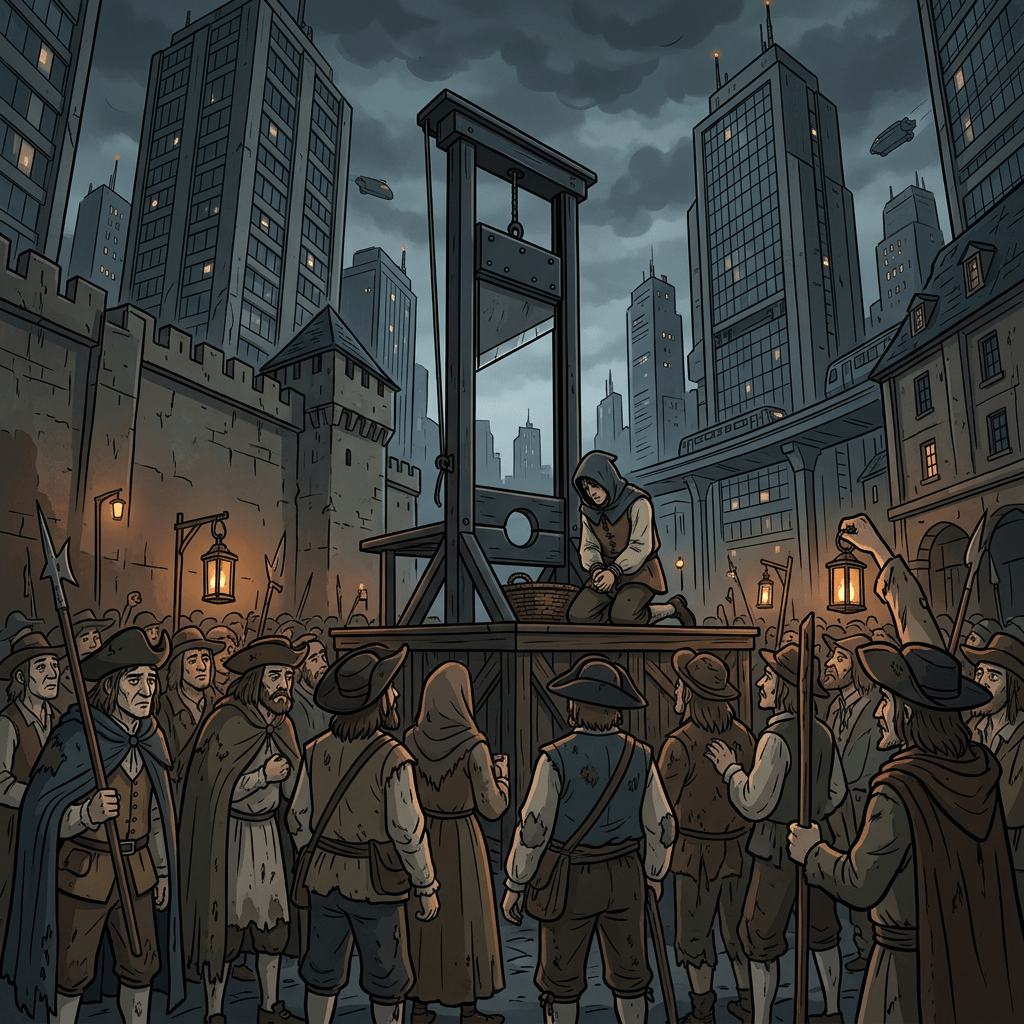
This analysis of institutional power converges directly in Foucault’s famous study of punishment and surveillance: Jeremy Bentham’s Panopticon. In Power/Knowledge, Foucault traces the historical mutation from monarchical torture (supplice)—a violent, discontinuous spectacle intended to display the King’s absolute power—to the modern carceral system. Public executions were costly and dangerous, frequently sparking popular riots and sympathy for the condemned . The 18th century replaced this spectacle with continuous, low-cost architectural surveillance, epitomized by Bentham’s Panopticon. Featuring a central tower surrounded by a ring-like structure divided into backlit cells, the Panopticon ensures that the inmate is always visible to the central observer, while being unable to see inside the tower itself. This optical asymmetry achieves a profound psychological effect: because prisoners never know whether they are currently being watched, they must assume they are under constant surveillance at every second. Consequently, the inspecting gaze is interiorized—each inmate becomes their own overseer, rendering physical force obsolete.
Importantly, Foucault demonstrates that the prison system did not “fail” despite its apparent inability to eliminate crime; rather, it succeeded brilliantly by manufacturing a distinct, card-indexed delinquency. By creating a marginalized criminal class, the state gained a powerful mechanism to infiltrate political movements, manage illegalisms, and justify the permanent, expanding presence of police surveillance throughout everyday civil society
3. Navigating the Corpus: An Intellectual Roadmap for Further Reading
To deepen one’s engagement with Foucault’s theoretical framework, scholars and students should approach his extensive body of work through a curated, thematic sequence that expands outward from the core insights of Power/Knowledge. The most immediate textual companion to Gordon’s collection is Foucault’s landmark monograph, Discipline and Punish: The Birth of the Prison (1975), particularly Part III on discipline, where the abstract mechanics of capillary power, spatial partitioning, and panopticism are richly illustrated through historical archives of prisons, schools, and military barracks . Following this, The History of Sexuality, Vol. 1: An Introduction (1976) provides the essential counterpart on biopower and the productive deployment of alliance and sexuality, demonstrating how power operates not by silencing bodily desires, but by incessantly compelling their speech and confession. For those interested in the formal methodological underpinnings of discursive formations, Foucault’s The Archaeology of Knowledge (1969) offers a rigorous examination of statements, archives, and rules of division, providing the epistemological foundation that complements his later genealogical inquiries.
Beyond Foucault’s major published monographs, a complete mastery of his political and social analytics requires turning to his seminal Collège de France lecture courses delivered during the mid-to-late 1970s. In “Society Must Be Defended” (1975–1976), Foucault reverses Clausewitz’s famous aphorism to analyze politics as war continued by other means, investigating how historical discourses of race struggle transformed into modern state biopolitics. This inquiry directly feeds into Security, Territory, Population (1977–1978), which traces the emergence of pastoral power, reason of state, and the concept of “governmentality”—the complex ensemble of institutions and calculations that targets the population as a whole. Extending this trajectory, The Birth of Biopolitics (1978–1979) examines the historical rise of American and European neoliberalism, illuminating how market rationality constructs human subjects as autonomous, self-regulating “entrepreneurs of themselves.” To contextualize these primary texts within broader philosophical traditions, Colin Gordon’s authoritative Afterword in Power/Knowledge remains essential reading, systematically tracing Foucault’s intellectual inheritance from Immanuel Kant, Friedrich Nietzsche, Georges Canguilhem, and Gaston Bachelard. Together, these foundational monographs, lecture series, and critical commentaries equip researchers across the human sciences with a versatile, cutting-edge analytical toolkit to critique contemporary forms of governance, institutional control, and social life..



Leave a Reply