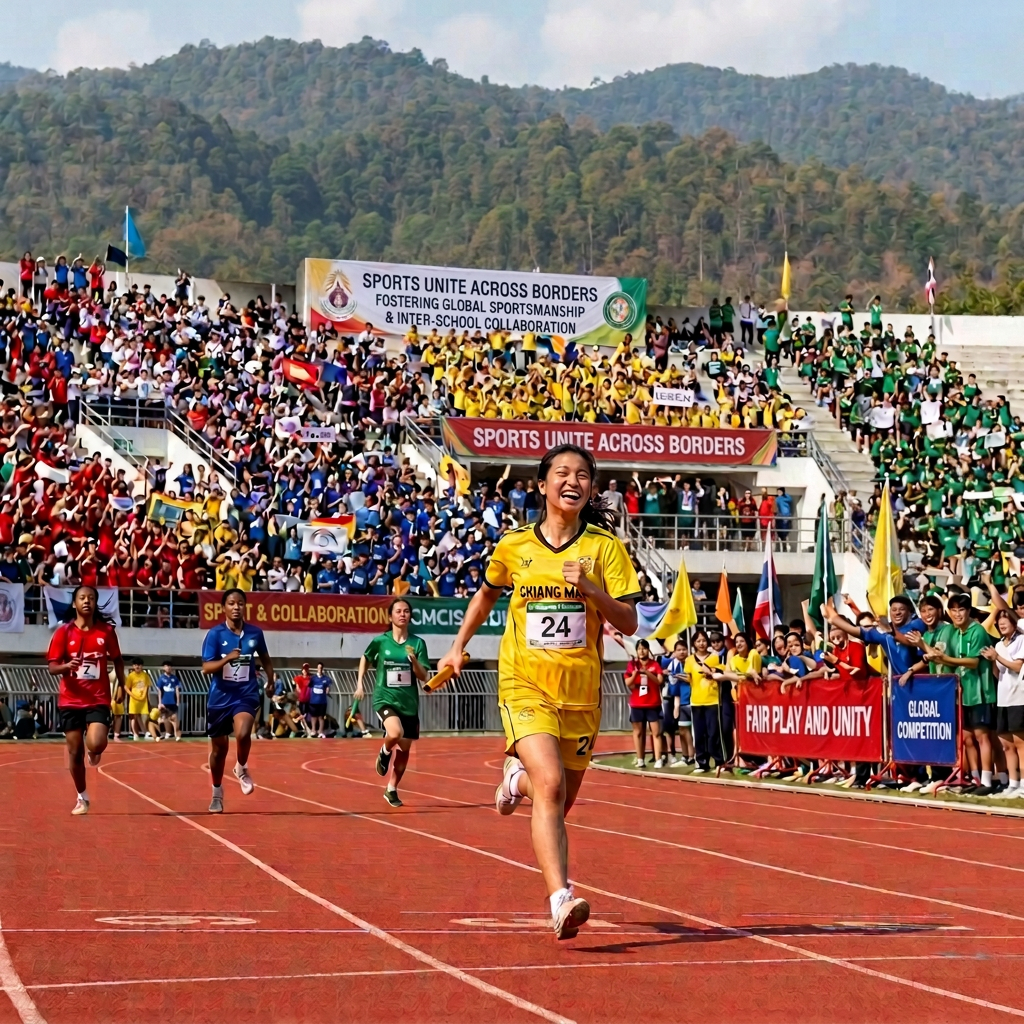
In rapidly expanding international school markets, institutional instincts often tilt toward competition: competing for student enrolments, recruiting top teaching talent, and securing market share. Yet, some of the most profound educational environments emerge when school leaders deliberately reject isolated rivalry in favour of collective efficacy.
When independent international schools collaborate, they unlock operational economies of scale and educational opportunities that no single campus—regardless of its endowment—can deliver alone. High-impact inter-school networks do not dilute institutional distinctiveness; instead, they establish a shared baseline of pedagogical quality, rigorous safeguarding, and rich co-curricular opportunities that directly elevate the student experience.
What Happens When Schools Work Together?
Collaborative consortia transform what is possible across four fundamental areas of student life:
1. Robust Safeguarding and Student Welfare
Child protection cannot stop at the school gates. When regional heads maintain active, trusting lines of communication, they create a regional safety net. Standardised safeguarding protocols, coordinated inter-school security updates, and structured student-transfer verifications ensure that student well-being remains uncompromised across the entire educational ecosystem.
2. High-Impact Student Arenas
Standalone campuses often struggle to achieve the critical mass required for large-scale academic and cultural initiatives. Through inter-school consortiums, students gain access to:
- Regional Model United Nations (MUN) Conferences featuring hundreds of diverse delegates.
- Curated Art Exhibitions hosted in public galleries and professional performance spaces.
- Global University Fairs that attract admissions directors from top-tier international universities who might otherwise bypass smaller individual institutions.
3. Region-Wide Athletic Leagues (CMAC)
Competitive athletics requires structure, parity, and consistent scheduling. Collaborative consortiums establish dedicated athletic bodies—such as the Chiang Mai Athletic Conference (CMAC)—delivering multi-tier, seasonal leagues for student-athletes from Under-8 (U8) through Varsity (U20). Across football, basketball, volleyball, swimming, track and field, and racket sports, students experience structured athletic development and meaningful sportsmanship.
4. Pooled Professional Development
Great student outcomes start with empowered educators. By pooling budgets and logistics, school networks host joint professional development days, bringing internationally renowned researchers and pedagogical experts directly to local faculties.
Case Study: The Chiang Mai Circle of International Schools (CMCIS)
A compelling real-world example of this model in practice is the Chiang Mai Circle of International Schools (CMCIS) in Northern Thailand. Comprising the heads of 11 prominent international institutions, CMCIS meets monthly to deliberate on regional educational policy, student safety, community standards, and advocacy through the International Schools Association of Thailand (ISAT).
Crucially, CMCIS acts as a regional benchmark for institutional credibility. Member schools must hold or actively pursue recognised Western accreditation—such as CIS (Council of International Schools), WASC, or NEASC—or curricular authorisation through the International Baccalaureate (IB) or Cambridge Assessment International Education.
A Diverse Ecosystem of Curricular Pathways
The CMCIS network proves that collaboration does not mean uniformity. Together, these 11 member schools provide students and families with access to virtually every major international curricular framework:
- British Curriculum (IGCSE & A-Levels): Rigorous, subject-specialised pathways designed for depth and university matriculation.
- American Curriculum & Advanced Placement (AP): Flexible, credit-based high school diplomas paired with rigorous AP capstone options.
- International Baccalaureate (IB PYP, MYP, & DP): Inquiry-led, holistic frameworks developing global perspective and research skills.
- Singapore Curriculum: Globally celebrated foundations in mathematics, science, and trilingual fluency.
- German National Curriculum: European standard curricula facilitating seamless reintegration into European higher education.
The 11 CMCIS Member Schools
- American Pacific International School (APIS) – IB World School (Primary & Boarding)
- Chiang Mai International School (CMIS) – Established US curriculum with Advanced Placement (AP)
- Chiang Rai International School (CRIS)- Chiang Rai’s based international school.
- Christian German School Chiang Mai (CDSC) – German curriculum with European & bilingual diplomas
- Grace International School (GIS) – American curriculum serving global and local communities
- Lanna International School (LIST) – British curriculum offering Cambridge IGCSE and A-Levels
- Nakornpayap International School (NIS) – Longstanding American curriculum with comprehensive AP tracks
- Panyaden International School (PYS) – Values-based, eco-conscious campus offering the IB Diploma Programme
- Prem Tinsulanonda International School (PTIS) – Four-programme IB World School with world-class boarding and sports facilities
- Singapore International School Chiangmai (SISB Chiangmai) – Trilingual Singapore and British/Cambridge curriculum
- Unity Concord International School (UCIS) – American curriculum with extensive academic and co-curricular programs
When schools shift their mindset from insular competition to structured partnership, students reap the rewards. By establishing clear accreditation standards, building regional sports leagues through CMAC, and sharing resources, networks like CMCIS prove that educational quality flourishes best in a connected community.





Leave a Reply