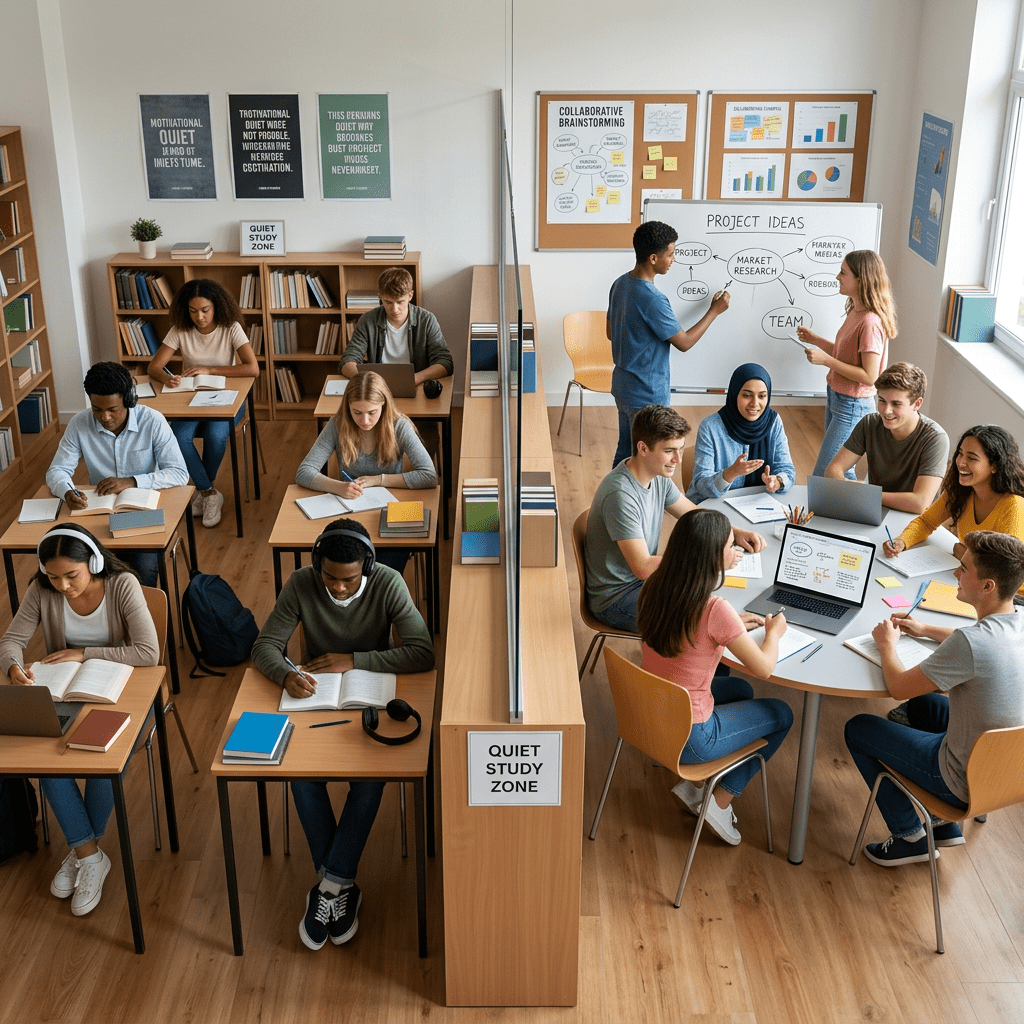
Imagine walking into a high school classroom.
In one room, a student sits quietly, taking meticulous notes, never interrupting the teacher, and using structured repetition to absorb the material before attempting to analyze it. To a Western observer trained in inquiry-based models, this student might look passive or overly reliant on rote learning.
Across the hall, in another room, a student leaps into a lively debate, challenges the teacher’s premise, and works through an idea out loud. To an educator steeped in traditional Confucian or holistic frameworks, this behavior might border on disrespectful or performative.
Neither view is wrong. Both reflect deeply ingrained cultural paradigms about what makes a “good student” and a “good teacher.”
As classroom demographics worldwide become increasingly diverse, understanding these implicit cultural contracts is no longer just an academic exercise—it is essential for effective pedagogy.
The Cultural Blueprint of the Classroom
What does “good” actually mean in education? The answer depends entirely on where you stand on the globe.
       [ Individualist / Western ]               [ Collectivist / Eastern ]
  Teacher = Facilitator of Discovery       Teacher = Moral Exemplar & Expert
  Student = Independent & Vocal            Student = Reflective & Diligent
1. East Asia: Mastery, Diligence, and Moral Guidance
Rooted in Confucian heritage, research by comparative educationalists like David Watkins highlights that learning in East Asia is often seen as a moral and collective duty.
- The Good Teacher: Highly respected as an authoritative source of knowledge (conduct guidance) and a moral guide deeply invested in a student’s character, academic success, and overall life path.
- The Good Student: Demonstrates effort (over innate talent), active listening, and self-regulation. Repetition isn’t seen as mindless “rote learning,” but as a necessary, deliberate path toward deep understanding.
2. Anglo-Western: Autonomy, Debate, and Facilitation
Drawing from constructivism and Western philosophy, Western models prioritize individual agency.
- The Good Teacher: Acts as a “guide on the side” or facilitator. They cultivate critical thinking, design interactive activities, and aim for an egalitarian, conversational relationship with students.
- The Good Student: Verbally participative, questions assumptions, works independently, and demonstrates intrinsic curiosity.
3. Sub-Saharan Africa: Ubuntu and Interdependence
Infused with the philosophy of Ubuntu (“I am because we are”), classroom norms in many African contexts emphasize human connectedness.
- The Good Teacher: Acts as a community elder and anchor of social cohesion, weaving pastoral care and collective well-being directly into academic delivery.
- The Good Student: Values collaboration, peer support, and social harmony over fierce, individualistic competition.
4. Latin America: Critical Agency and Buen Vivir
Influenced by critical pedagogy (such as the work of Paulo Freire) and indigenous worldviews like Buen Vivir (Living Well), many Latin American paradigms reframe the classroom completely.
- The Good Teacher: A dialogic co-learner who connects classroom content to real-world social justice and local community knowledge.
- The Good Student: Critically conscious, willing to question societal structures, and committed to ecological and community harmony.
The International Education Imperative
For educators working in international schools, these cultural differences aren’t abstract concepts—they walk through the classroom door every morning.
International school classrooms are complex melting pots where a teacher raised in one cultural paradigm often teaches students raised in three or four others. Why is cross-cultural awareness so vital for international educators?
1. Avoiding False Diagnostics
When we don’t understand cultural paradigms, we misinterpret student behavior. A quiet student isn’t necessarily unengaged; they may be demonstrating profound respect for the teacher’s authority. A student who hesitates to speak up in group work isn’t lacking ideas; they may come from a culture where speaking out of turn disrupts collective harmony. Cross-cultural literacy prevents teachers from mistaking cultural style for academic capability.
2. Moving Beyond “Pedagogical Imperialism”
International curricula (such as IB, IGCSE, or AP) often reflect Western, inquiry-based ideals. While these frameworks have great value, assuming they are the only valid way to learn can alienate students from different educational backgrounds. Effective international teachers bridge this gap by explicitly explaining why a particular methodology is being used, honoring the strengths of different learning styles rather than dismissing them.
3. Building Authentic Relationships with Families
Parent-teacher interactions are heavily shaped by these implicit cultural expectations. A parent from a traditional background may expect the teacher to assign rigorous, structured practice and provide firm, direct instruction, viewing flexible group work with skepticism. Conversely, a Western parent might ask why their child isn’t being given more autonomy. An interculturally competent teacher can translate educational goals across these different value systems, building genuine trust with families.
Final Thoughts: Expanding the Frame
There is no single, universally “correct” model of a good teacher or a good student.
The magic of international education lies in its power to loosen our grip on our own cultural assumptions. When teachers recognize that quiet diligence is just as valid a path to understanding as spontaneous debate, the classroom becomes a space of genuine inclusion.
By expanding our definition of what it means to teach and learn well, we don’t just become better international educators—we help our students become truly global citizens.


Leave a comment