
From the wonderful educational ARTICLE – https://blog.ed.ted.com/2018/04/02/why-dance-is-just-as-important-as-math-in-school

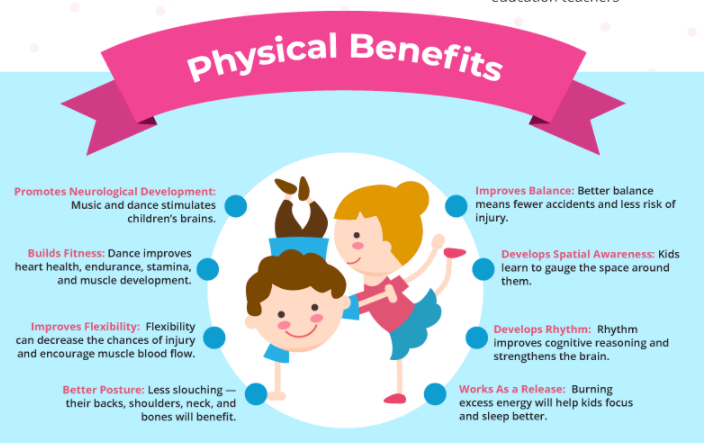
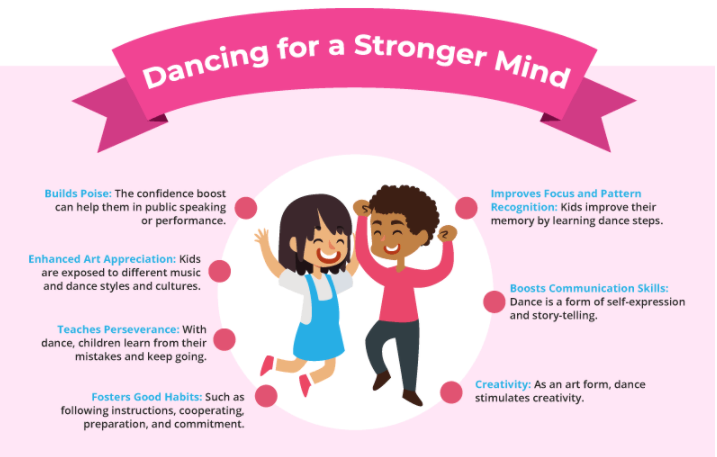
One principal was especially impressed by the improvements in reading and math scores among her fifth-grade students.
“There are no ifs, ands, or buts about the program’s impact in the academic lives of our children,” says Lois Habtes of the Emanuel Benjamin Oliver Elementary School in the Virgin Islands. “When I first got here, they were failing scores. Last year — our second year in the program — they got up to 83 percent. This year, our fifth grade scored 85 percent on the reading test, the highest in the school.”
“Dance and theater are mostly seen as second-class citizens in schools.“
It’s not just dance, of course. The success of Dancing Classrooms is an example of the well-documented relationship between physical activity and educational achievement. The trend in most US school districts is to cut phys ed and similar programs in favor of increasing time for math, science and English. These measures have simply not improved achievement as so many policy makers assumed they would.
A panel of researchers in kinesiology and pediatrics conducted a massive review of more than 850 studies about the effects of physical activity on school-age children. Most of the studies measured the effects of 30 to 45 minutes of moderate to vigorous physical activity three to five days a week on many factors — physical factors such as obesity, cardiovascular fitness, blood pressure and bone density, as well as depression, anxiety, self-concept and academic performance. Based on strong evidence in a number of these categories, the panel firmly recommended that students should participate in one hour (or more) of moderate to vigorous physical activity a day. Looking specifically at academic performance, the panel found strong evidence to support the conclusion that “physical activity has a positive influence on memory, concentration and classroom behavior.”
Most children in public schools in the US receive some education in music and visual arts, patchy though it often is. But dance and theater are mostly seen as second-class citizens, and opportunities in the arts, in general, are lowest for students in areas of high poverty. “There are still millions of students who do not have access to any arts instruction. Many of them are in our poorer communities where the programs are arguably needed the most,” says Bob Morrison, the founder and director of Quadrant Research.
 Teacher's Notes
Leave a comment